✦ 100% QC Inspected ✦ Built for Protectors ✦ Backed by Our Covenant ✦
Bolt Action vs Gas Gun for Precision: An Honest 2026 Take
Bolt action vs gas gun for precision shooting in 2026. Accuracy, reliability, cost, and the real-world tradeoffs that should drive your platform choice.
PRECISION RIFLE GUIDES: RELOADING, BUILDS & LOAD DEV | SENTINEL
David Henry
5/14/20268 min read
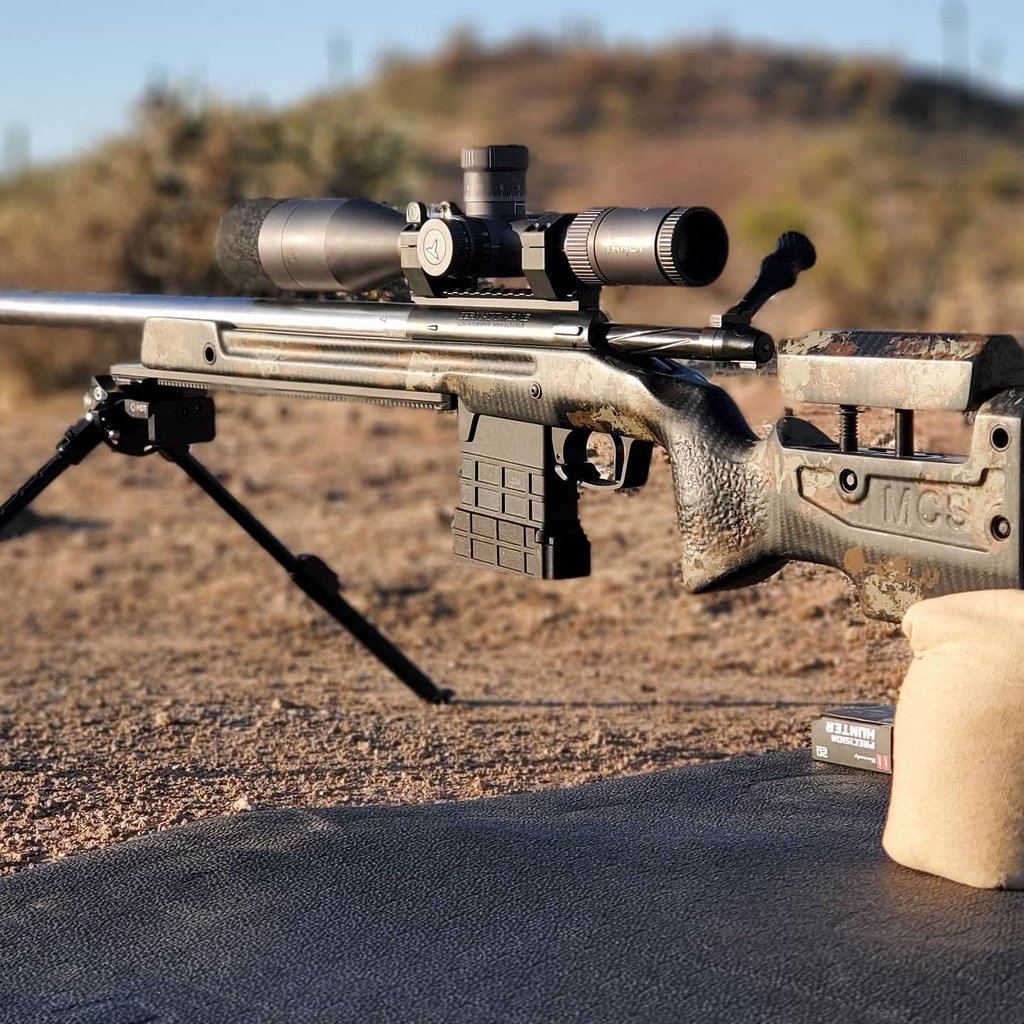
Bolt Action vs Gas Gun for Precision: An Honest Comparison
Walk into any precision shooting forum and you'll find this argument running on a 10-year loop. Bolt actions are inherently more accurate. Gas guns can't compete. Anyone serious shoots a bolt. Or the opposite: Gas guns have caught up. Modern AR-10s shoot with bolts. The bolt-only crowd is stuck in the past.
Both camps are partly right and mostly wrong. The truth is more interesting than either side admits.
This is an honest comparison built around what actually happens when shooters take both platforms to a range, a match, or a hunt. By the end you'll know which platform fits your mission and why, without needing to pick a tribe.
The Honest Accuracy Comparison
Let's get the headline question out of the way first.
Yes, bolt actions are still slightly more accurate at the top end. A premium custom bolt rifle from a serious gunsmith Bartlein barrel, trued action, glass-bedded chassis, hand-tuned ammunition will shoot tighter than the best gas gun built to similar standards. Not by a lot. Maybe 0.1 to 0.3 MOA at 100 yards in capable hands. But the gap exists, and it's measurable.
The gap matters less than people think for most shooters. A 0.4 MOA bolt rifle and a 0.6 MOA gas gun both deliver vital-zone hits on game and threat-stopping precision on man-sized targets at any realistic distance. The 0.2 MOA gap is real but it lives in the noise for 95% of practical shooting.
Above 600 yards, the gap starts to matter. ELR and long-range competition exposes platform differences. Wind reading errors compound, and a tighter intrinsic group leaves more margin for shooter error. This is where bolt rifles still dominate in serious competition.
The gap is closing fast. Modern gas-gun manufacturing in 2026 produces precision AR-10s and AR-15s that shoot inside 0.5 MOA consistently. Ten years ago that was a unicorn. Today it's a Tuesday. The platform has matured dramatically.
So if your question is "which platform is more accurate," the technically correct answer is: bolt action, by a narrowing margin, that you probably can't take advantage of unless you're already a top-1% shooter.
The more useful question is: which platform fits my actual mission?
Where Bolt Actions Win
Bolt rifles are the right platform when one of these is true.
You're Shooting at Distance
Past 600 yards, the inherent precision and consistency of a bolt action becomes meaningful. The lockup is more rigid. The barrel doesn't have a gas port disrupting harmonics. The action cycles when you cycle it, not when the gas system says so. Every variable you eliminate matters more as range increases.
For ELR (1,000+ yards), competition PRS at distance, or hunting that demands precise shot placement past 500 yards, the bolt action still has the edge.
You're Shooting Deliberately
Bolt actions reward methodical shooters. Every shot is an act. You break the trigger, work the bolt, settle the rifle, break the next trigger. The platform itself slows you down and that's a feature for precision work, not a bug.
If your shooting style is one round at a time with conscious effort between each, the bolt action's natural cadence matches your process.
You Want Maximum Accuracy Per Dollar
This surprises people. At a given budget, a bolt action will outshoot a gas gun. A $2,500 bolt rifle is a serious precision tool. A $2,500 gas gun is a decent rifle. The platform's mechanical simplicity means more of your dollar goes into accuracy-relevant parts.
A budget-built precision bolt action (Tikka T3X CTR, Bergara B-14 HMR, Howa 1500 chassis builds) can deliver 0.5 MOA performance for $1,200-$1,800. Matching that with a gas gun typically requires $2,500-$3,500.
You're Hunting Big Game at Distance
The classic precision rifle hunting scenario one carefully placed shot at a deer, elk, or hog at distance is what bolt actions were built for. Quiet, accurate, no gas system to fail in cold weather, no follow-up cycling that costs you sight picture.
For deliberate hunting, the bolt is still the standard.
You Want Caliber Flexibility Beyond .308
The bolt action world includes calibers the gas gun world barely touches: 6.5 PRC, 6mm Creedmoor in serious chamberings, 7mm PRC, .300 PRC, the various wildcat 6mm and 6.5mm cartridges that dominate competition. If you want to shoot what the top shooters are shooting, the bolt action is your platform.
Where Gas Guns Win
The other side of the ledger is just as honest.
You Need Follow-Up Shots
Hogs run in groups. Coyotes call in pairs. Defensive scenarios rarely involve one target. A semi-auto puts your second shot on target in a fraction of the time a bolt does, and your sight picture stays available the entire time.
For any application where multiple targets or follow-up shots are realistic, the gas gun isn't a compromise it's the right tool.
You Want a Multi-Mission Rifle
This is where the gas gun's case gets strongest. A precision AR-10 chambered in 6mm Creedmoor or .308 can shoot a PRS match Saturday, work as a deer rifle Sunday, defend the property Monday night, and take a coyote Tuesday morning. One rifle, one zero, one manual of arms.
The bolt action doesn't multi-mission as well. It's optimized for one job. A gas gun is optimized for capability the ability to do many jobs adequately rather than one job perfectly.
You Train for Stress
Under stress, gross motor skills survive and fine motor skills fail. Working a bolt is a fine motor skill. Pressing a trigger and absorbing recoil is gross motor. The gas gun degrades less when adrenaline hits.
For defensive and tactical applications, this matters. Your accuracy on a square range with a bolt rifle isn't your accuracy when something is actually happening. The gas gun gives up some peak accuracy to maintain capability under load.
You Run Suppressors and Optics That Demand Cycling
Modern suppressed shooting often runs better through gas guns. Adjustable gas blocks let you tune for suppressor backpressure. Running a suppressor on a bolt rifle works fine, but the added weight on a thinner barrel can shift point of impact more noticeably.
If your build is suppressed and tuned, the gas gun absorbs the configuration better.
You Want Magazine Capacity
A bolt rifle with a five-round mag is the standard. A gas gun with a 20-round mag is the standard. For varmint work, multi-target hunting, or any application where round count between magazine changes matters, the gas gun wins.
Cost Comparison: 2026 Real Numbers
Honest pricing for precision capability in each platform.
Bolt Action Tiers
Entry precision ($1,000-$1,800): Tikka T3X CTR, Bergara B-14 HMR, Howa HCR, Ruger American Predator. Capable of 0.5-0.8 MOA with quality ammunition. Real precision tools at working budgets.
Mid-tier ($1,800-$3,500): Tikka T3X TAC A1, Bergara Premier, Christensen Ridgeline, Sako S20 chassis. 0.4-0.6 MOA territory. The sweet spot for most serious bolt action precision shooters.
Premium ($3,500-$7,000): Custom builds on Stiller, Defiance, Impact, or Falkor actions. Bartlein/CRB/Proof barrels, hand-fitted everything. 0.3-0.5 MOA repeatable.
No-compromise ($7,000+): Top-tier custom rifles from serious gunsmiths. The ceiling of the bolt action.
Gas Gun Tiers
Entry precision ($1,800-$2,500): Quality AR-15 or AR-10 build with match barrel, free-float rail, two-stage trigger, quality BCG. Capable of 0.7-1.0 MOA with quality ammunition.
Mid-tier ($2,500-$4,500): Premium components throughout Geissele triggers, Proof Research or Criterion barrels, billet receivers, adjustable gas systems. 0.5-0.7 MOA territory. This is where serious precision AR builds live, as covered in the sub-MOA AR-15 build guide.
Premium ($4,500-$8,000): Custom-built precision AR-10s in 6mm Creedmoor, 6.5 Creedmoor, or .308 from serious AR gunsmiths. JP Enterprises, Larue Tactical, KAC SR-25 series. 0.4-0.6 MOA repeatable.
No-compromise ($8,000+): Top-end precision AR builds with hand-tuned components. The platform's ceiling.
The honest math: bolt actions deliver more precision per dollar, especially at the entry and mid-tier. Gas guns charge a premium for the platform's mechanical complexity, and you pay it because the platform offers capabilities the bolt doesn't.
Reliability: The Conversation Nobody Has Honestly
Reliability gets cited in this debate constantly, and the takes are usually wrong.
Bolt actions aren't infinitely reliable. Bolt rifles have failure modes. Bolt handles can break. Firing pins can fail. Stocks can crack. Triggers can go out of adjustment. The single-stage simplicity of a bolt action does mean fewer failure modes but "fewer" doesn't mean "none."
Gas guns aren't unreliable. A properly built AR-pattern rifle with quality components and reasonable maintenance will run for thousands of rounds without significant failures. The mythology of fragile gas guns is usually based on cheap rifles built with poor components, not modern precision builds.
Both platforms benefit from maintenance. Bolt rifles need their actions cleaned, locking lugs greased, and triggers maintained. Gas guns need their BCGs cleaned, gas systems checked, and springs replaced periodically. Neither is "set and forget" if you're using it for serious work.
Cold weather is the real differentiator. Gas guns are more sensitive to extreme cold than bolt actions. Lubricants thicken. Gas pressure changes. A gas system that runs perfectly at 70°F may short-stroke at 0°F. Bolt rifles don't care about temperature in the same way. For winter hunting at altitude, the bolt has a real advantage.
The Hybrid Approach: What Smart Shooters Actually Do
Here's the truth most "bolt vs gas" articles dance around: serious precision shooters frequently own and use both.
Not because they're indecisive. Because the platforms cover different missions:
The bolt rifle for deliberate, distance, hunting, and competition work. When the shot is taken at 500+ yards, when one round at a time is the cadence, when maximum precision per shot matters more than capability across shots.
The gas gun for working precision. Property defense, predator hunting, multi-target hunting, situations where follow-up shots and capability under stress matter as much as the first shot's accuracy.
The shooter with both isn't waffling. They're matching the tool to the mission. Trying to make one platform do everything is what creates compromises — buying a heavy bolt rifle that's slow on follow-ups for property defense, or a precision AR-10 that's underperforming next to a bolt at long-range matches.
What This Means for Your Decision
If you're trying to pick a platform for precision work in 2026, here's the honest framework.
Choose a Bolt Action If:
Your primary mission is distance shooting (600+ yards)
You shoot deliberately, one round at a time
You want maximum precision per dollar
You're hunting big game or competing in PRS at distance
You want caliber flexibility beyond .308 family
You shoot in extreme cold regularly
Choose a Gas Gun If:
Multi-target scenarios are realistic for your use
You want one rifle to multi-mission
Defensive and tactical capability matters
You shoot suppressed regularly
Magazine capacity is operationally important
You'll be moving and shooting, not just shooting
Choose Both If:
Your missions genuinely span both worlds
You compete in matches that allow both platforms
You hunt and defend property and want optimization for each
You can afford to optimize each rifle for its mission
Pairing the Right Optic to the Mission
Both platforms benefit from optics that match the mission. A precision bolt rifle dedicated to distance work wants different glass than a working gas gun that does daytime precision and nighttime predator control.
For multi-mission gas guns that need both daytime precision and nighttime capability, the Breacher C1 thermal clip-on lets you keep your day optic LPVO, prism, whatever and add full thermal capability without committing the rifle to thermal-only operation. Same zero. Same reticle. Thermal when you need it, removed in seconds when you don't. For working precision rifles, this is the configuration that delivers both jobs without compromise.
For lighter rifles or offset configurations where weight matters, the four-ounce Tevin Sentinel S2 earns its keep on a 45-degree mount without ruining the rifle's handling.
We covered the broader optic conversation in the thermal scope vs night vision flagship worth reading if you're configuring a multi-mission rifle for serious work.
The Bottom Line
The bolt action vs gas gun debate is mostly tribal. The honest answer for any individual shooter is: what's your mission?
Distance, deliberate, hunting? Bolt. Multi-mission, capability, defensive? Gas gun. Both at high level? Buy both.
Don't let internet arguments push you toward a platform that doesn't match what you actually do. The best precision rifle is the one that fits your real-world mission, in your real-world hands, with your real-world budget.
If you want to talk through how optic selection should match your platform choice, reach out. Or browse the Sentinel Optics lineup to see how our systems integrate with both bolt and gas platforms.
Precision is a habit. The platform is the tool. Stand ready.
Sentinel Optics USA
Your loadout awaits. Explore our thermal systems and find your edge.
Contact
Newsletter
© 2026 All rights reserved.