✦ 100% QC Inspected ✦ Built for Protectors ✦ Backed by Our Covenant ✦
How to Read a Five-Shot Group: What Targets Tell You
Five-shot groups reveal what's wrong with your rifle, ammunition, or shooting technique. Here's how to read them — vertical stringing, fliers, and what to fix.
PRECISION RIFLE GUIDES: RELOADING, BUILDS & LOAD DEV | SENTINEL
David Henry
6/24/20267 min read
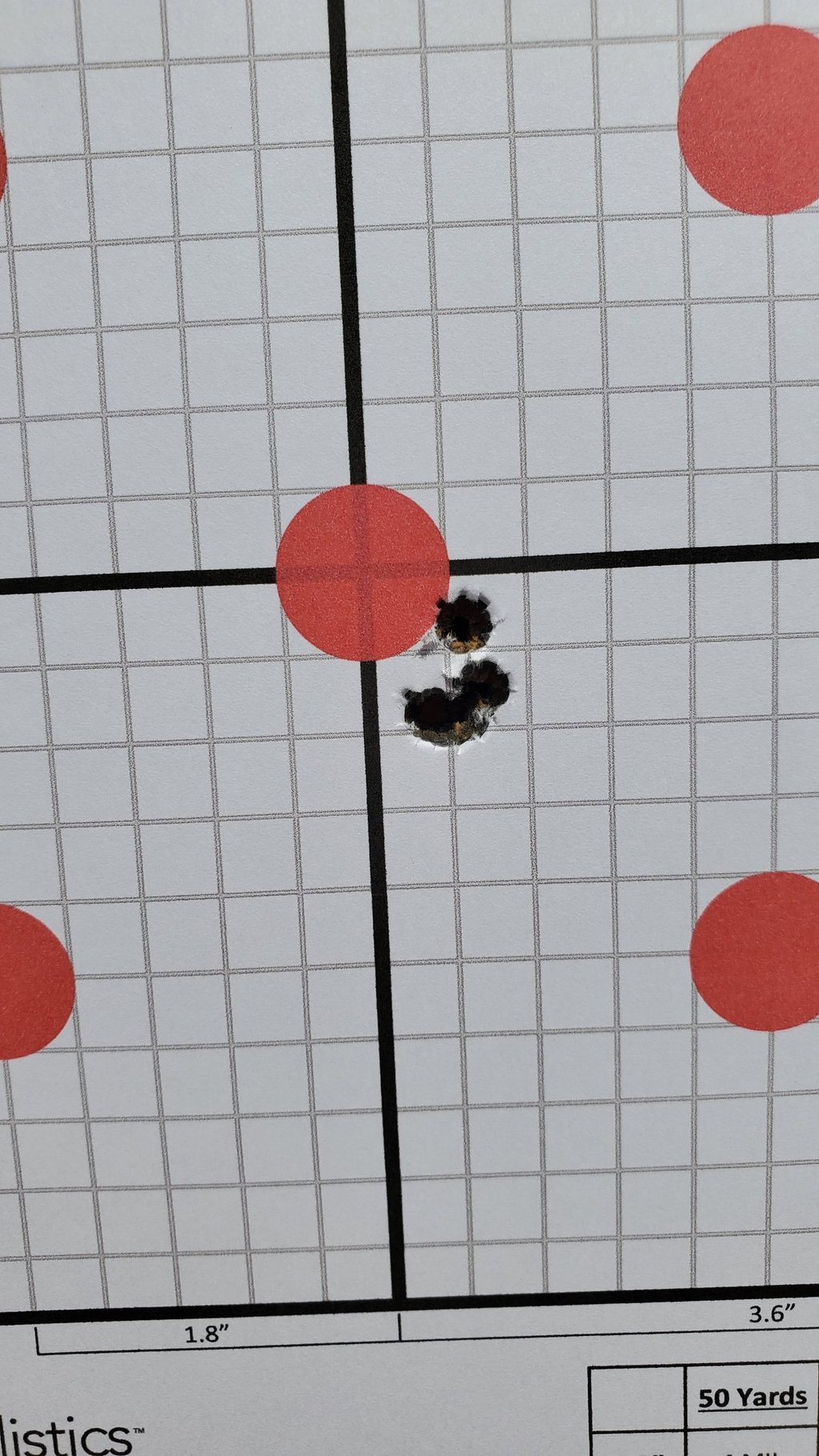
How to Read a Five-Shot Group: What Your Targets Are Actually Telling You
Most shooters look at a target and see one thing: how big is the group? That's the wrong question or rather, it's only the first question. The shape of a group tells you what's wrong, what's right, and where to look next. A target is a diagnostic tool. Most shooters never learn to read it.
This is a working precision shooter's guide to reading what your groups are actually saying. By the end, you'll know what vertical stringing means, why fliers happen, when to blame the rifle versus the shooter, and what each pattern is telling you to do next.
Why Five Shots, Not Three
Before we get to patterns, the foundational point: three-shot groups are statistical noise.
A 2 MOA rifle can shoot a beautiful three-shot group. Anyone can. The question isn't whether the rifle can put three rounds close together it's whether it can put five. Or ten. Repeatedly.
Five-shot groups expose the truth that three-shot groups hide. The fourth and fifth rounds are where ammunition variation, barrel harmonics, and shooter inconsistency show up. If you're making decisions about your rifle, your handloads, or your technique based on three-shot groups, you're making decisions based on luck dressed up as data.
Every group in this article assumes five shots minimum. We covered why this matters in the load development guide same logic applies to all group analysis.
Reading the Patterns
There are six common group patterns. Each tells a different story.
Pattern 1: Tight, Round Group
What it looks like: five shots clustered in a roughly circular pattern, no obvious directional bias, group size at or below the rifle's expected capability.
What it means: the rifle, ammunition, and shooter are all delivering at their intrinsic capability. This is what you're trying to achieve.
What to do: nothing. Verify with another five-shot group at the same target. If both groups are similar size and shape, you have a load and a technique you can trust.
Pattern 2: Vertical Stringing
What it looks like: shots strung vertically, taller than wide, sometimes by a significant margin.
What it means: this is almost always one of three things, in this order of likelihood:
Ammunition velocity variation. Inconsistent muzzle velocity throws each round at a slightly different vertical at the target. High SD ammunition strings vertically, especially as range increases. A chronograph confirms it instantly.
Vertical position inconsistency. Shooter is changing cheek pressure, shoulder pressure, or natural point of aim between shots. Each shot lands where the shooter aimed that round, not where the previous one was.
Bedding or stock issue. Loose action screws, contact between barrel and stock, or a flexing chassis lets the barrel point in slightly different directions under recoil.
What to do: chronograph the load first. If SD is over 15 fps, the ammunition is the problem go back to load development and refine charge weight or seating depth. If SD is good (under 12 fps), check action screw torque and verify the barrel is fully free-floated. If both check out, the shooter is introducing the variation.
Pattern 3: Horizontal Stringing
What it looks like: shots strung left-to-right, wider than tall.
What it means: less common than vertical stringing, and more often a shooter or environmental issue:
Wind. Even slight crosswind at 100 yards moves a 77gr bullet enough to string. If you're shooting outside without wind flags, you're probably reading wind variation as group dispersion.
Trigger control inconsistency. Heeling the trigger (pressing right-handed shooters away from the bore) or jerking left throws shots laterally.
Inconsistent grip pressure. Squeezing the grip differently on each shot rotates the rifle in subtle but measurable ways.
What to do: shoot under calm conditions or use wind flags. If horizontal stringing persists in still air, the shooter is the issue. Dry-fire practice on trigger control, then re-test live fire.
Pattern 4: Tight Group With One Flier
What it looks like: four shots in a tight cluster, one shot well outside the group — typically 1-3x the group size away from center.
What it means: this is the most ambiguous pattern, and the most important to read correctly. Possibilities, in order of likelihood:
Shooter error on that one shot. Pulled a shot, had a bad trigger break, lost focus on natural point of aim. This is the most common cause and the hardest one shooters want to admit.
Bad round. A single round with a different powder charge, a bullet seated wrong, or a defective primer. More common with handloads early in development; rare with quality factory ammunition.
First-round flier from a cold/clean barrel. First round from a freshly cleaned barrel often hits in a different place than subsequent rounds. Check whether the flier was the first or last round.
What to do: don't ignore the flier. Shoot another five-shot group. If the new group is tight with no flier, the original was probably shooter error or a bad round accept it as noise. If the second group also has a flier, you have a real issue: the rifle, the ammunition, or your technique is producing inconsistency you need to investigate.
A serious mistake to avoid: never measure the group with the flier excluded and call it your real group size. "It would have been 0.7 MOA without that one round" is how shooters lie to themselves. Measure all five. If you want to investigate the flier, do it separately but don't pretend it didn't happen.
Pattern 5: Diagonal Stringing
What it looks like: shots strung along a diagonal line typically upper right to lower left for right-handed shooters.
What it means: this is almost always a shooter mechanics issue. The shooter is heeling the trigger and changing rifle position simultaneously, creating a combined horizontal and vertical error.
What to do: focus on trigger control fundamentals. Dry fire with a coin balanced on the muzzle, working until the coin doesn't fall. Re-test. If the diagonal persists, the issue might be a stock that doesn't fit you (length of pull, comb height) — a rifle that fits will hold position better through recoil.
Pattern 6: Two-Group Pattern
What it looks like: shots clustered into two distinct groups within the larger pattern. Three rounds clustered together, two more clustered together somewhere else.
What it means: something changed between the clusters. Common causes:
Barrel temperature change. Some barrels, especially thinner profiles, walk as they heat up. The first three cool-bore shots cluster in one spot; rounds four and five hit elsewhere as the barrel warms.
Ammunition lot change. Different lots of even quality factory ammunition shoot to slightly different points of impact.
Position shift. Shooter changed body position, sandbag position, or stock contact between shots without noticing.
What to do: shoot the next group with consistent cooling between shots (45-60 seconds minimum) and verify ammunition is from the same lot. If two-group patterns persist with controlled conditions, the rifle has a thermal walking issue — a known and accepted limitation of some lightweight barrels.
How to Measure a Group Honestly
A few rules that separate honest group measurement from optimistic group measurement.
Measure center-to-center, outside edges of the two farthest shots, minus one bullet diameter. This gives you the actual group size in inches. From there, divide by the range in hundreds of yards to get MOA.
Round honestly. If your group measures 1.07 inches at 100 yards, that's a 1.0 MOA group. It is not a "sub-MOA" group. The line is the line.
Include every shot. No "called fliers" excluded from the measurement. If you pulled a shot, that's part of the data it tells you about your technique that day. Pretending the bad shot didn't happen makes the data lie.
Document conditions. Temperature, wind, target distance, shooting position, ammunition lot, round count on the barrel. A 0.6 MOA group at 100 yards in dead-calm conditions from a bench is different from a 0.6 MOA group with light wind from a prone bipod. Both are useful data points; they're useful in different ways.
Diagnostic Workflow When Groups Open Up
When your rifle was shooting well and now it isn't, work through this checklist in order:
Verify ammunition. Different lot? Old ammunition? Different bullet weight? Component lot changes are the single most common cause of unexplained accuracy loss.
Verify torque. Action screws, scope mount, scope rings. Loose hardware shows up as opened groups before it shows up as anything else.
Inspect the barrel. Crown damage, copper fouling, carbon buildup. A fouled barrel can lose half its accuracy and gain it back from a thorough cleaning.
Check the optic. Mount integrity, ring contact, parallax setting, scope reticle still where it should be. Optics fail; verify them.
Round count check. Premium AR-15 barrels have 3,000-6,000 round accurate lifespans. If you're past that, the barrel may be talking to you.
Then, finally, the shooter. Verify your fundamentals haven't drifted. Dry fire practice. Have someone watch you shoot. Sometimes the issue is small habits that built up over months.
In our experience, ammunition is the cause about 40% of the time, hardware torque is 25%, the barrel/cleanliness is 15%, optics are 10%, and the shooter is 10%. Most shooters check the shooter first and ammunition last. Reverse that order and you'll diagnose faster.
What This Has to Do With Your Optic
A precision rifle is only as effective as the data your optic helps you generate. A scope with parallax issues, inconsistent click values, or insufficient resolution at distance corrupts every group you shoot and every diagnostic conclusion you draw.
For precision rifles that need to do real work day or night, the Breacher C1 thermal clip-on preserves your day optic's zero which means the diagnostic groups you've shot to verify your load are still valid when you transition to thermal capability.
For working precision shooters who multi-mission their rifles, the integration of optics, ammunition, and platform matters as much as any individual component.
The Bottom Line
A target is a conversation between your rifle, your ammunition, and you. Most shooters never learn to listen.
Five-shot groups, measured honestly, read carefully, and acted on systematically that's how you actually improve. A shooter who can read groups can troubleshoot their own rifle, identify their own technique flaws, and develop loads more effectively than a shooter who just looks at the size number and moves on.
We covered load development as the natural next step from group reading in the load development guide. And the platform-level discussion of where precision capability comes from is in the bolt action vs gas gun comparison.
If you want to talk through how thermal capability fits a precision rifle you've already developed loads for, reach out. Or browse the Sentinel Optics lineup for systems built to the same standard the rest of your rifle is.
Precision is a habit. Reading your groups is how you build it. Stand ready.
Sentinel Optics USA
Your loadout awaits. Explore our thermal systems and find your edge.
Contact
Newsletter
© 2026 All rights reserved.